Malawi rebuilds its potato seed system one village at a time
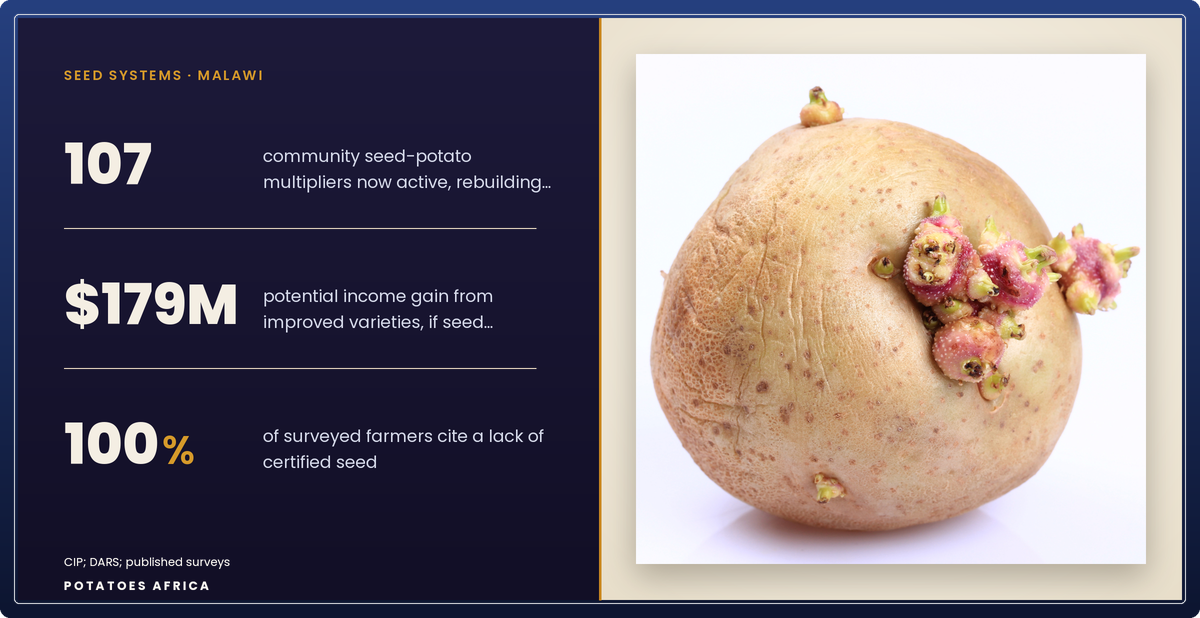
Ask Malawi's potato farmers what holds them back and the answers are unanimous. In farm surveys, every grower cited a lack of certified seed, alongside pests and disease, no access to credit, no collective price-setting and inadequate storage. The result is a sector running on recycled, degenerating tubers that yield poorly and spread disease.
The stakes are large. Modelling of improved-variety adoption in Malawi estimates a total economic surplus of roughly US$108 to 179 million, and a measurable cut in poverty, if better varieties reach farmers' fields — gains currently stranded by the seed system rather than by the varieties themselves.
The response is to rebuild seed supply from the bottom up. Working with Malawi's Department of Agricultural Research Services, the International Potato Center has helped establish decentralised seed multiplication in farming communities, and roughly 107 seed-potato multipliers — individuals, groups, associations and cooperatives — are now active. Farmer Field School programmes have trained hundreds of thousands of households in climate-smart techniques, and community-based multipliers are producing cleaner planting material closer to where it is needed.
Storage remains the weak link. Without adequate stores, farmers must sell at harvest when prices are lowest, and seed potatoes — bulky and quick to sprout — are hard to hold between seasons. Decentralised multiplication shortens the distance clean seed has to travel, but turning Malawi's potato potential into income will take storage and market organisation to match. The varieties exist; the plumbing to deliver them is what is being built.
South African growers are wiring their fields with weather stations to fight frost, blight and waste

Soundararadjane S: India's potato-processing story and its lessons for Africa
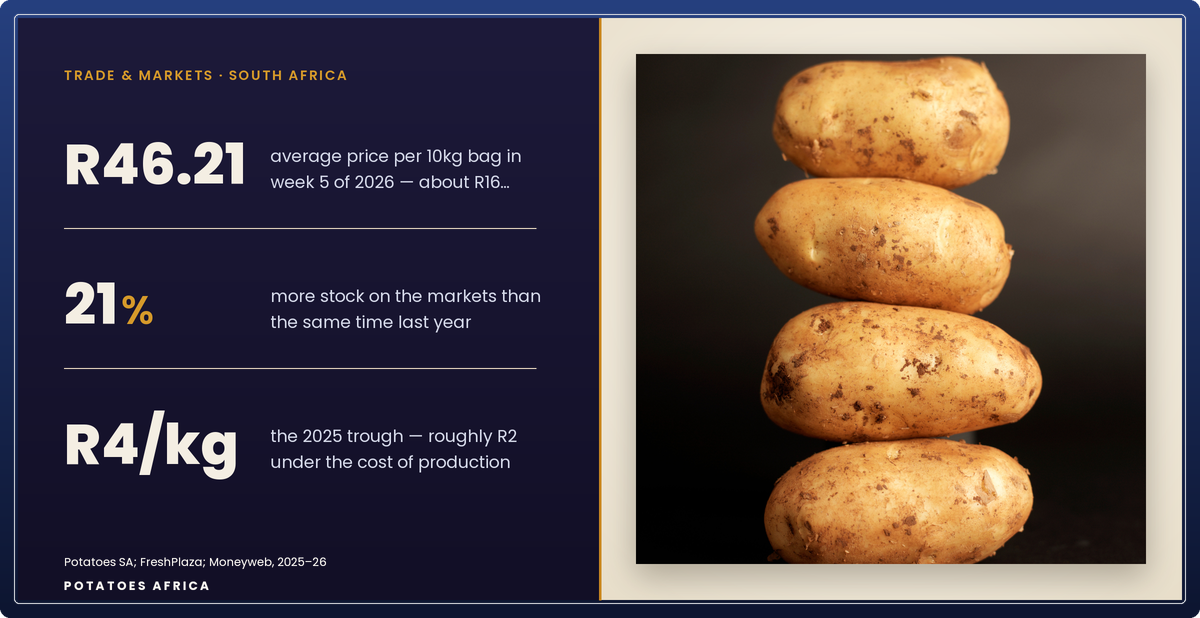
A bumper crop turns sour: South Africa's potato price slump runs into 2026
The week in African potato, in your inbox
Production, trade, policy and prices across the continent — one email, no noise.