Algeria's potato paradox: big enough to export, volatile enough to import
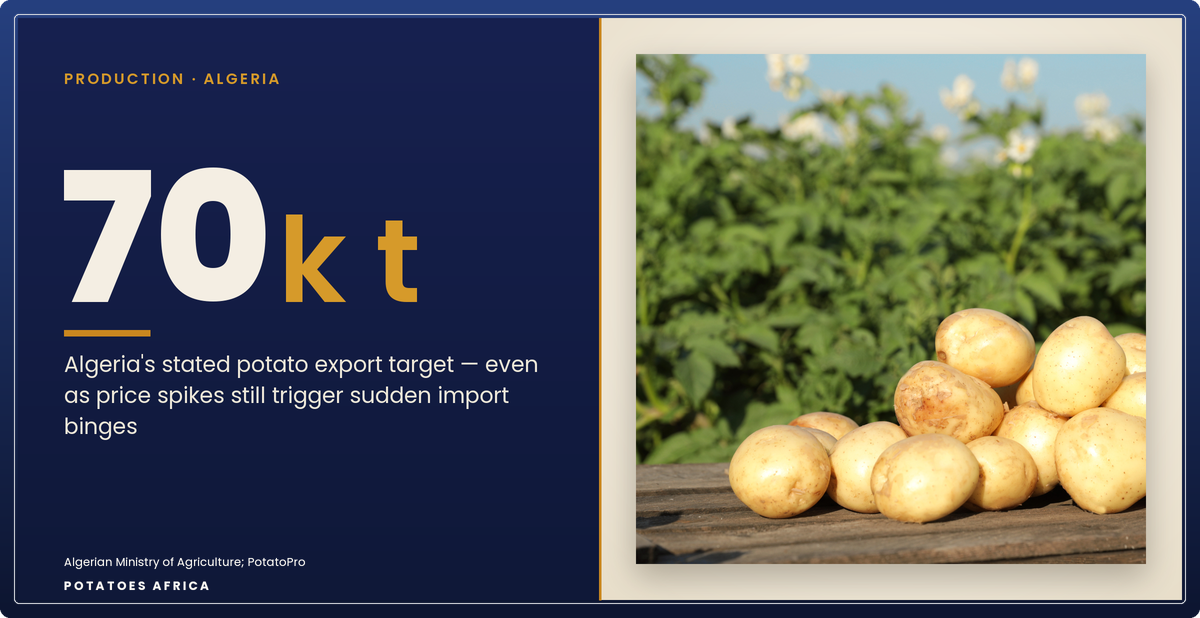
Algeria is one of Africa's larger potato producers, and it has spent two decades chasing agricultural self-sufficiency. Under the long-running National Agricultural and Rural Development Programme, the state poured investment into irrigation, land reclamation and private-sector farming, lifting vegetable output sharply and cutting a once-enormous food-import bill. Potatoes have been central to that story, and in good years officials have talked openly of exporting surpluses — the agriculture ministry has floated a target of around 70,000 tonnes of exports.
But the performance is fragile. The market swings between glut and shortage. After stretches of self-sufficiency, a poor harvest or a bout of speculation can spike retail prices and force emergency imports — as in 2022, when authorities authorised importing 100,000 tonnes to cool prices ahead of Ramadan. The same volatility that produces export ambitions in one season produces import scrambles the next.
A second dependency runs underneath: seed. Algeria has long relied on imported seed potatoes, and it has repeatedly set goals to localise seed production and halt those imports — a target that keeps slipping. Without a reliable domestic seed supply, yields and plantings stay hostage to the cost and availability of foreign seed.
The fix is the same one facing producers across the continent: storage and processing to absorb good harvests, and a home-grown seed system to stabilise supply. The 2025 global "potato flood" — oversupply from Europe, Egypt and Turkey collapsing prices — was a fresh reminder that expanding production without parallel marketing and storage simply turns a good year into a price crash. Algeria has the land and the ambition. What it lacks are the shock absorbers.
In Egypt, the test for Western potato varieties isn't genetics — it's local proof
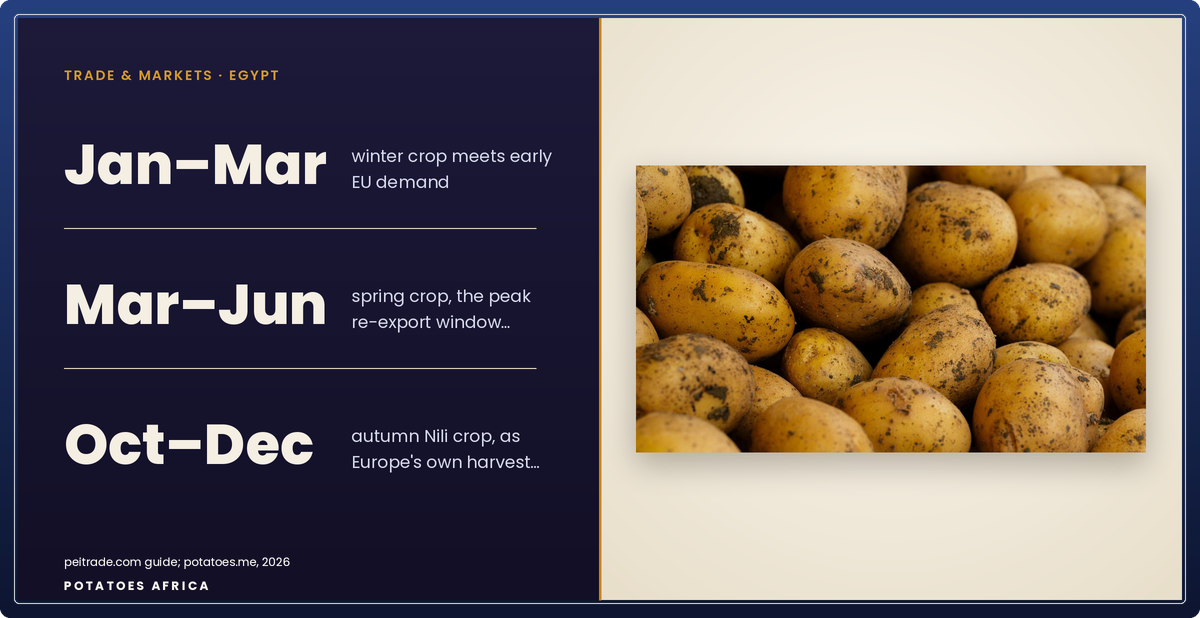
Egypt's potato corridor to Rotterdam runs on Dutch seed and a narrow calendar
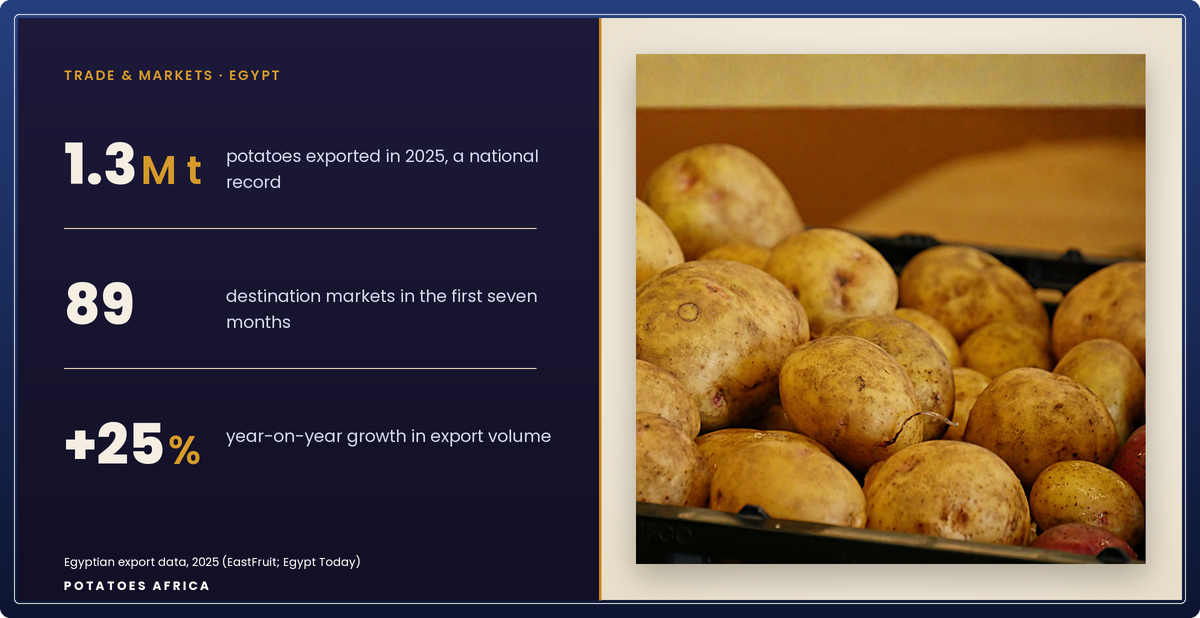
How Egypt turned the desert into Africa's potato export engine
The week in African potato, in your inbox
Production, trade, policy and prices across the continent — one email, no noise.