Morocco's potato exports come roaring back after a self-inflicted collapse
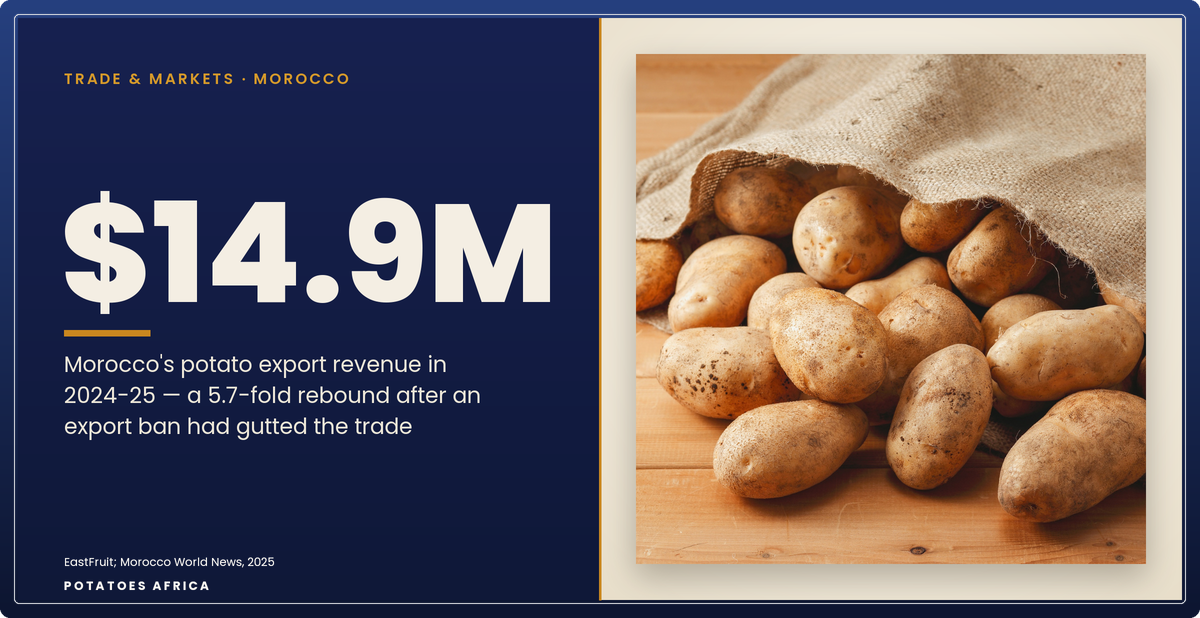
Morocco's potato export sector has staged a dramatic comeback. Between July 2024 and May 2025 the country shipped about 42,900 tonnes of table potatoes worth $14.9 million — a 5.7-fold jump on the previous season, according to EastFruit data reported by Morocco World News.
The collapse it is recovering from was largely self-inflicted. From February 2023 to July 2024 the government banned exports of potatoes, onions and tomatoes to protect domestic supply and tame prices. Shipments cratered to just 7,400 tonnes in 2023-24, and Morocco tumbled from 28th to 67th in the global exporter rankings — a steep fall from a 2018-19 peak of nearly 100,000 tonnes. The ban was later replaced with a quota system, reopening the trade.
The rebound has been powered by West Africa and Europe. Mali and Mauritania alone now take close to half of Moroccan shipments, with the Sahel's drought-prone markets reliant on imported vegetables, while European demand has stayed firm. Morocco ships in two seasonal windows, roughly July to September and February to April.
But the recovery is precarious. Growers are squeezed by recurring drought and tight water availability, and farmgate prices in growing zones such as Kikou run only 3 to 3.5 dirhams a kilogram before roughly doubling on the way to consumers, with intermediary margins blamed for much of the gap. The country also imports its seed potatoes rather than producing them, leaving planting decisions exposed to external costs. The 2023 embargo showed how quickly a policy decision can erase years of market share — and how exposed the trade remains to both weather and trade rules.
The missing middle: why aggregation decides who profits from potatoes
In Egypt, the test for Western potato varieties isn't genetics — it's local proof
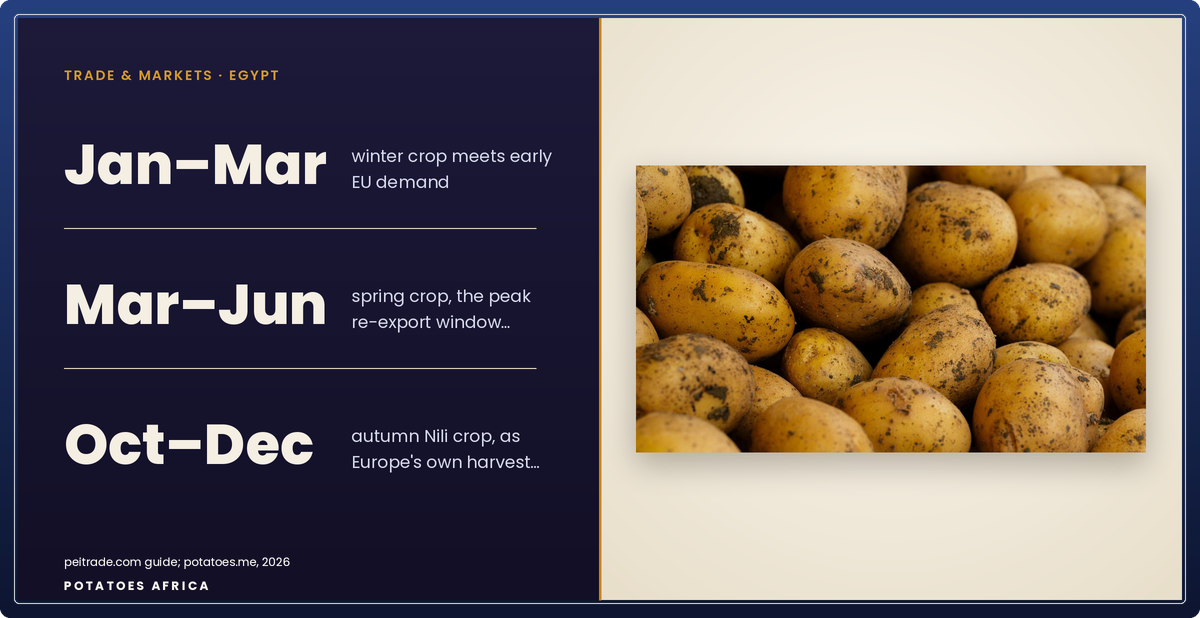
Egypt's potato corridor to Rotterdam runs on Dutch seed and a narrow calendar
The week in African potato, in your inbox
Production, trade, policy and prices across the continent — one email, no noise.