Building a cold chain that smallholders can actually use
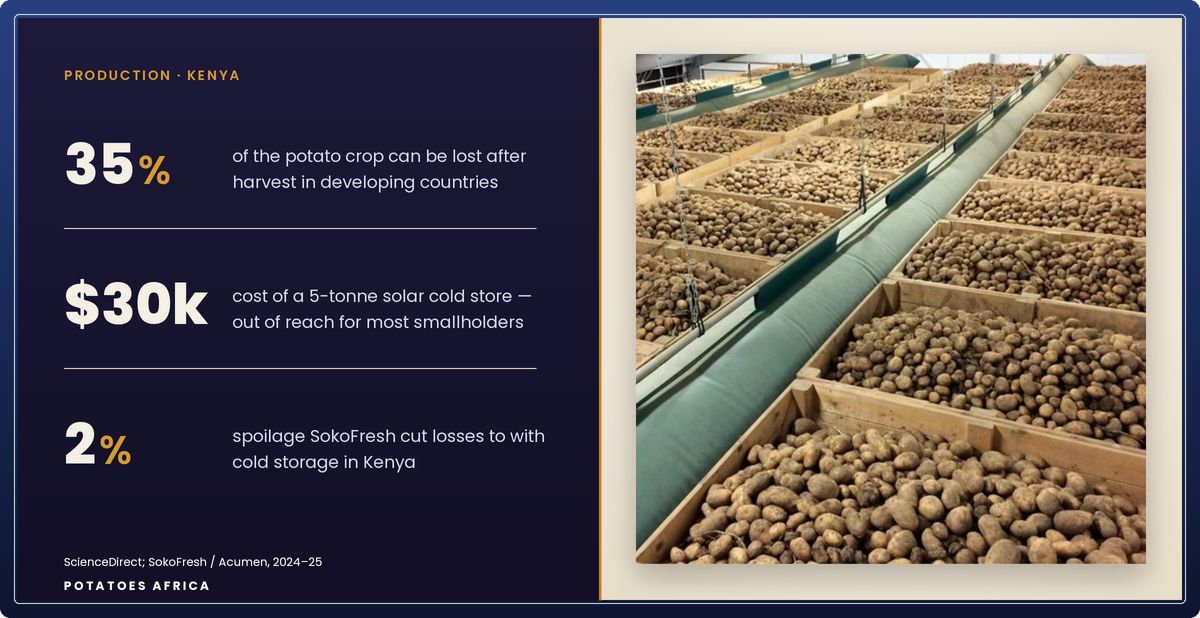
A potato that survives late blight and grows from clean seed can still be lost in the weeks after harvest. The tuber is perishable, and in developing countries 15 to 35% of potato production is lost after harvest — to physical damage, decay, water loss, and the simple fact that farmers with no storage must sell into a glutted market or let the crop spoil. In Ethiopia's highlands, post-harvest losses of 20 to 25% are routine.
The shortfall is storage. Without it, a smallholder's only option at harvest is to sell everything at once, when prices are lowest and brokers hold the leverage. Surplus in good years crashes the farmgate price; scarcity months later is met by imports. Cold storage breaks that cycle by letting farmers hold quality and sell when the market is thin.
Modern cooling works but is expensive: a 5-tonne solar-powered cold store can cost around $30,000, far beyond an individual smallholder. The breakthrough has been in the business model rather than the hardware. In Kenya, SokoFresh installs solar cold storage and sells it as a pay-as-you-go service bundled with aggregation and market access, cutting spoilage on stored produce to as little as 2%, backed by impact investors including Acumen.
Lower-tech options matter just as much for the majority off the grid. Ventilated stores, underground pits and diffused-light stores — which keep seed potatoes cool and slow sprouting using shade and airflow rather than electricity — are affordable and, well managed, sharply reduce losses. Across Rwanda, Malawi and Uganda, building stores in the producing zones is increasingly treated as core infrastructure rather than an afterthought.
The economics are straightforward: every tonne saved after harvest is a tonne that did not need to be grown again, and a tonne the farmer can sell on better terms. For a crop where so much effort goes into raising what comes out of the ground, the cold chain is about keeping it. The technology exists at every price point; the task is getting it to the farmers who need it, in a form they can afford.
The week in African potato, in your inbox
Production, trade, policy and prices across the continent — one email, no noise.