Christella Uwase: the young Rwandan seed multiplier taking inclusivity to WPC 2026
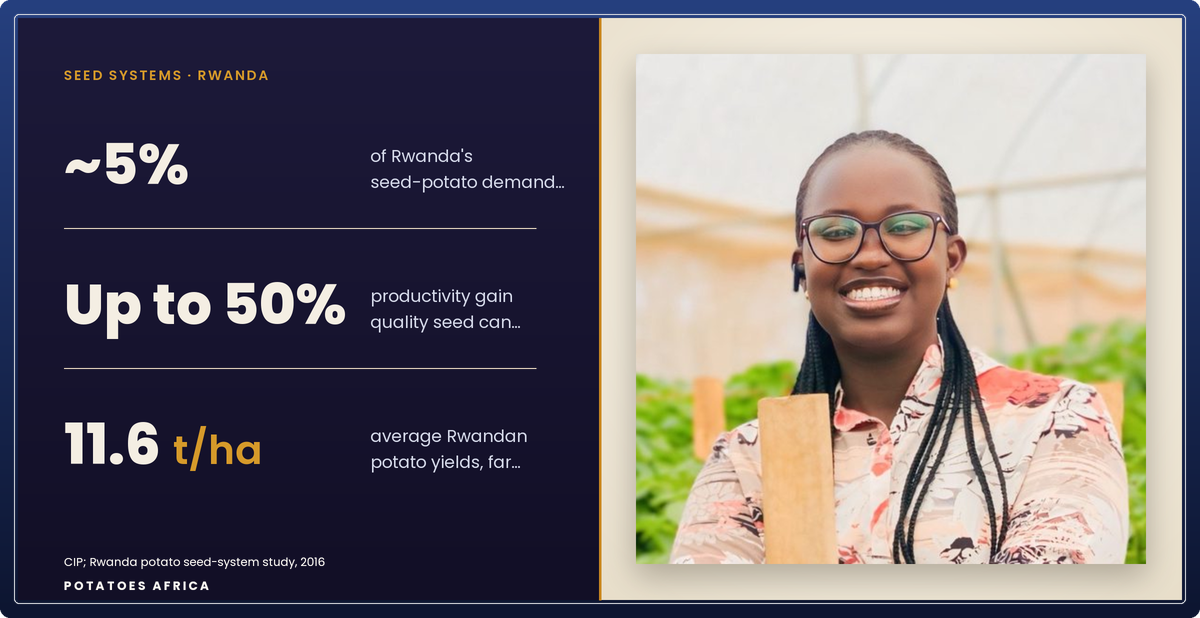
When the World Potato Congress opens in Kenya this October, one of the first voices it put forward belongs to a young Rwandan who has built a business out of a deceptively basic problem: most farmers cannot get clean seed. Christella Uwase, founder and chief executive of Bountiful Farmers Ltd, is described as Rwanda's youngest female seed multiplier, and she has staked her company on the idea that quality seed — not land or effort — is what decides whether a smallholder thrives.
Bountiful Farmers specialises in multiplying and commercialising high-quality Irish potato minitubers using a Sandponic system, a soil-free method that improves seed quality and limits the soil-borne diseases that plague conventional multiplication. The technique sits in the same family of rapid-multiplication tools — alongside aeroponics and rooted apical cuttings — that the International Potato Center (CIP) has helped introduce to Rwandan institutions to speed the production of early-generation seed. Uwase's pitch is that the technology is only half the story; the other half is who gets to use it. She has built the company around the conviction that clean seed underpins both food security and farmer incomes, and has opened the operation to university interns to widen the pool of people who understand how it works.
The gap she is working against is stark. Potato is one of Rwanda's most important food and cash crops — official figures put national output at around 916,000 tonnes a year — yet the formal seed system reaches only a sliver of demand. A detailed study of Rwanda's seed system found that certified seed accounts for roughly 5% of what the country actually needs, leaving most farmers to replant tubers saved from earlier harvests or bought informally. The consequences show up in the field: average yields have hovered near 11.6 tonnes per hectare, well below the 30-plus tonnes the crop can deliver. Development groups working in Rwanda estimate that switching to quality seed can lift productivity by about half, and in some programmes double yields and incomes within a single season.
Building that formal supply is neither quick nor cheap. Certified seed requires several successive generations of multiplication under tightly controlled conditions, each cycle taking months, and only a handful of Rwandan institutions have had the capacity to produce it. That bottleneck — together with a long-standing "seed leak," in which material intended for multiplication is sold for eating instead — is why private multipliers like Uwase matter: they add capacity at the early, clean-seed end of a chain that has too few players. Rwanda has lately been positioning itself as a regional hub for quality seed potato, supplying neighbours across the Great Lakes, which raises the stakes for anyone who can reliably produce disease-free starter material.
Uwase's standing rests on more than her company. Rooted in a family farming background, she has become a visible advocate for young people and women in African agriculture, representing Rwanda at international gatherings including the World Food Forum at FAO headquarters in Rome in 2024. A member of the Rwanda Youth in Agribusiness Forum, she has also held leadership roles off the farm, having served on a University of Rwanda board and in a gender portfolio within the university's student union — experience that informs the inclusion argument she now brings to the sector.
That argument is the substance of her Congress session. Announced as the first speaker in the WPC 2026 series — launched to mark the International Year of the Woman Farmer — Uwase will present "Driving Inclusivity in Seed Potato Production: Insights from a Youthful Agripreneur in Rwanda." The talk is built to show how youth and gender inclusivity can reshape seed systems, drawing on her own path from a young grower to the head of a seed company, and to make the case that widening participation is not charity but a route to a more resilient seed supply.
Her place on the programme is pointed. The 13th World Potato Congress, running from 26 to 30 October at Naivasha's Sawela Lodges, is the first to be held in Sub-Saharan Africa, and its agenda turns on partnerships for food and nutrition security. A young woman entrepreneur who has taken a laboratory-grade multiplication technique and built a business around getting clean seed into more hands — and who frames the seed problem as much about inclusion as about science — is a direct embodiment of that theme. For a region where over half a million smallholders in the Great Lakes alone depend on the crop, Uwase is evidence that the next generation of seed suppliers is already emerging, and that some of them are building the answer from Rwanda.
Frequently asked
Who is Christella Uwase?
She is the founder and CEO of Bountiful Farmers Ltd in Rwanda, which produces high-quality Irish potato minituber seed using a soil-free Sandponic system. She is described as Rwanda's youngest female seed multiplier and is an advocate for youth and women in African agriculture.
What will Christella Uwase speak about at the World Potato Congress 2026?
She will present 'Driving Inclusivity in Seed Potato Production: Insights from a Youthful Agripreneur in Rwanda,' focusing on youth and gender inclusivity, in line with the International Year of the Woman Farmer.
What is the Sandponic system?
It is a soil-free method of producing potato minitubers that improves seed quality and reduces soil-borne disease. It belongs to the same family of rapid-multiplication techniques as aeroponics and rooted apical cuttings, used to generate clean early-generation seed.
Why does Rwanda need more quality seed potato?
Certified seed meets only about 5% of national demand, so most farmers replant saved or informal seed and yields stay well below potential. Quality seed can raise productivity by roughly 50%, which makes closing the gap central to food security.
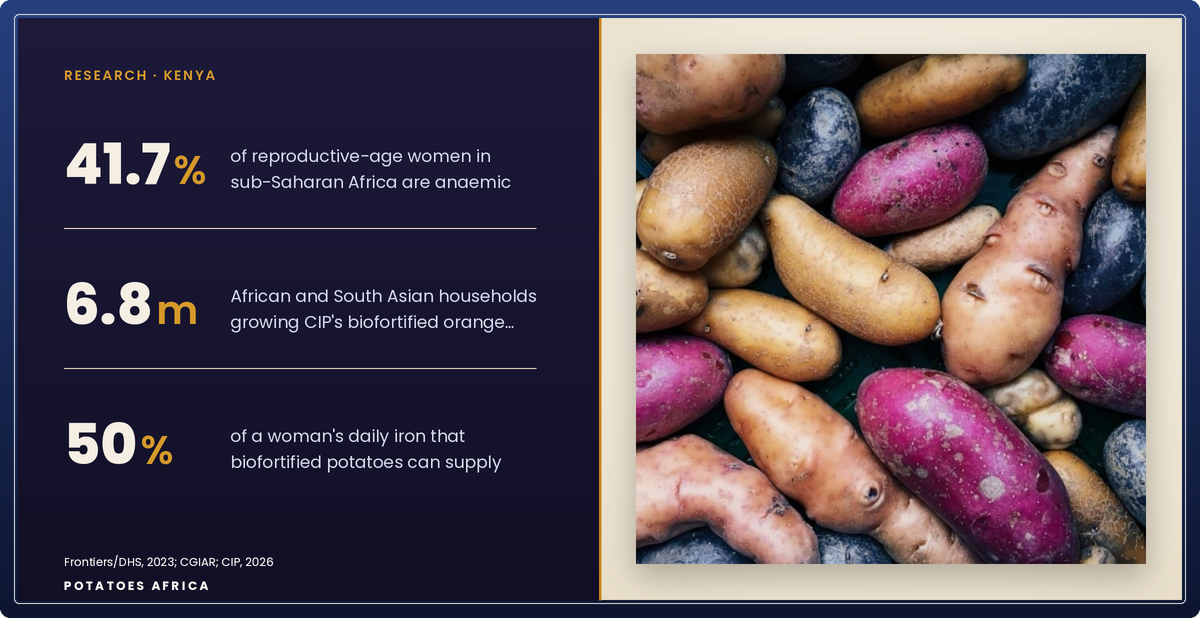
Iron-biofortified potatoes could help tackle anaemia in Africa's highlands
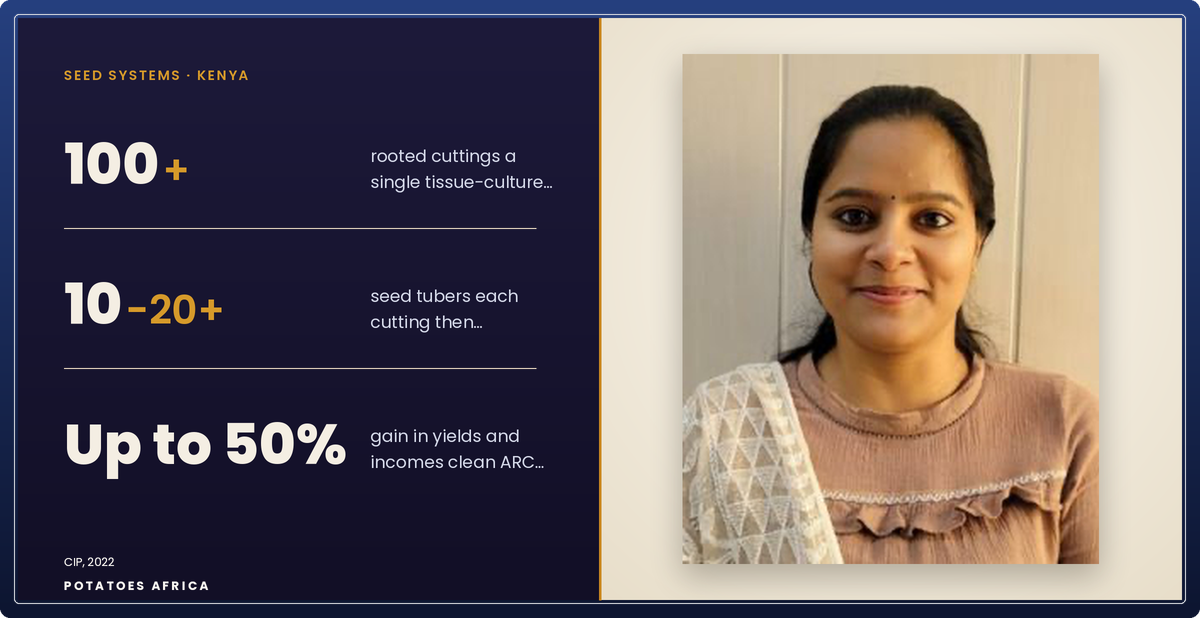
Pooja Pandey: India's apical-cutting playbook, and its lessons for African seed systems
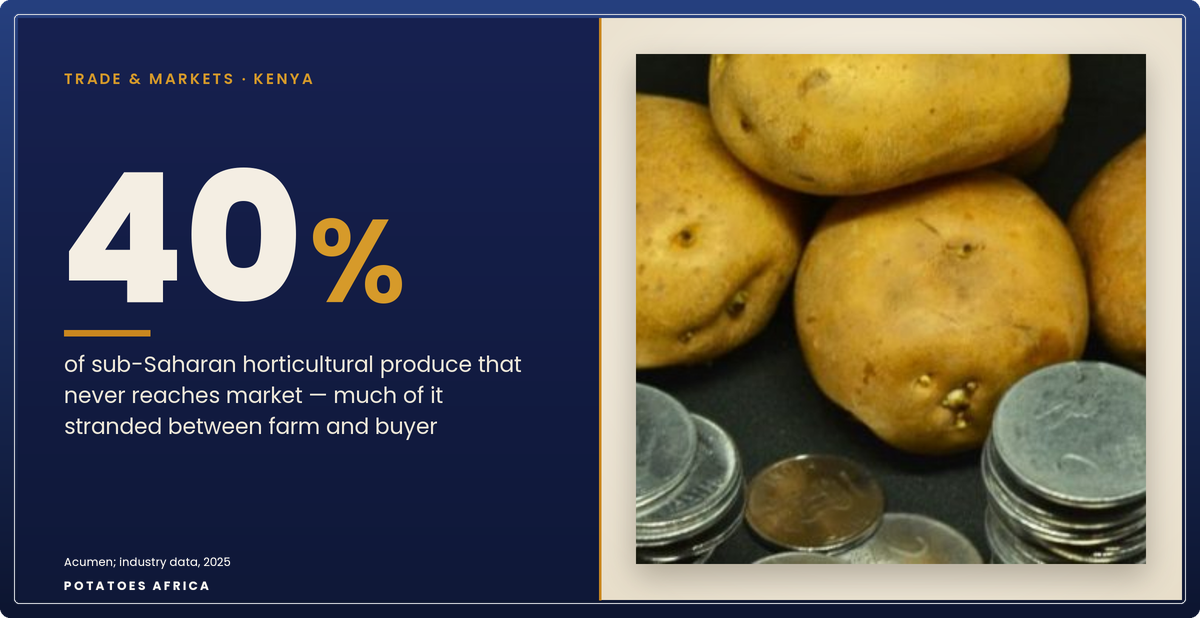
The missing middle: why aggregation decides who profits from potatoes
The week in African potato, in your inbox
Production, trade, policy and prices across the continent — one email, no noise.