In Egypt, the test for Western potato varieties isn't genetics — it's local proof
Egypt's commercial potato model has always run on imported genetics — seed sourced largely from the Netherlands, Scotland, France and other certified-seed producers, feeding a sector expanding across fresh, export and frozen-product markets. So when growers, seed suppliers and processors ask whether Western varieties such as Russet Burbank, Innovator and Santana can succeed in Egypt, the more useful version of that question isn't whether a foreign-bred variety can physically grow in Egyptian soil — most already do — but whether it can deliver marketable yield, acceptable dry matter, strong fry colour and low internal defects under Egyptian conditions, as trade outlet Potato News Today has laid out in a recent variety-by-variety assessment.
Santana is the clearest case where that proof already exists. Dalsa Food Industries, one of Egypt's frozen-fries producers, states publicly that its fries are made from Diamond and Santana potatoes grown on its own farms — a working example of a Western processing variety, prized for high yield and dry matter, performing commercially once matched to the right agronomy and market. Innovator's story is earlier-stage: citing HZPC's 2024–2025 annual report, the trade press notes that Frozena Foods and its agricultural arm Tazweed for Agricultural Crops farm more than 4,000 hectares in Al-Farafra and Wadi El Natroun, and have moved through Asterix and Quintera before recently trialling Cardyma and Innovator — evidence of an evaluation process under way rather than a settled result.
Russet Burbank gets the most cautious treatment of the three. It is one of the world's best-known processing and baking potatoes — high solids, long tubers, strong storability and fry quality — but it is also demanding, generally needing a long growing season and uniform moisture to avoid knobbiness and second growth. In a country shaped by heat, aridity and irrigation-dependent production, that profile is a real agronomic constraint, not a footnote. It may be plantable under carefully managed irrigation and the right seasonal window, but nothing in its pedigree makes it commercially superior to varieties already proven in Egypt without trial data to back it up.
Egypt's growing calendar cuts both ways here. The processing crop is typically planted in autumn and harvested from January to April, letting growers dodge the worst summer heat and hit export windows when competing regions are out of season — but that same calendar limits what a northern-bred, long-season variety can realistically be asked to do, given heat stress, seed's physiological age, water quality and soil salinity. Farm Frites Egypt, cited in the same reporting, selects varieties by climatic zone and soil type and works with growers on fertilisation and irrigation accordingly — reinforcing that desert-based potato production here runs on precision, not on a variety label.
Underneath the agronomy sits a harder gatekeeper: seed and phytosanitary rules. Imported seed potatoes must clear variety approval, certification class, tuber size and phytosanitary documentation — including testing for diseases such as brown rot — to protect Egypt's market access, particularly for ware-potato exports to sensitive markets. A variety with excellent field and processing potential is not a viable commercial option if certified seed cannot be legally imported, safely multiplied and maintained within that framework. For Egypt's processors, the variety conversation increasingly starts there, not with genetics.
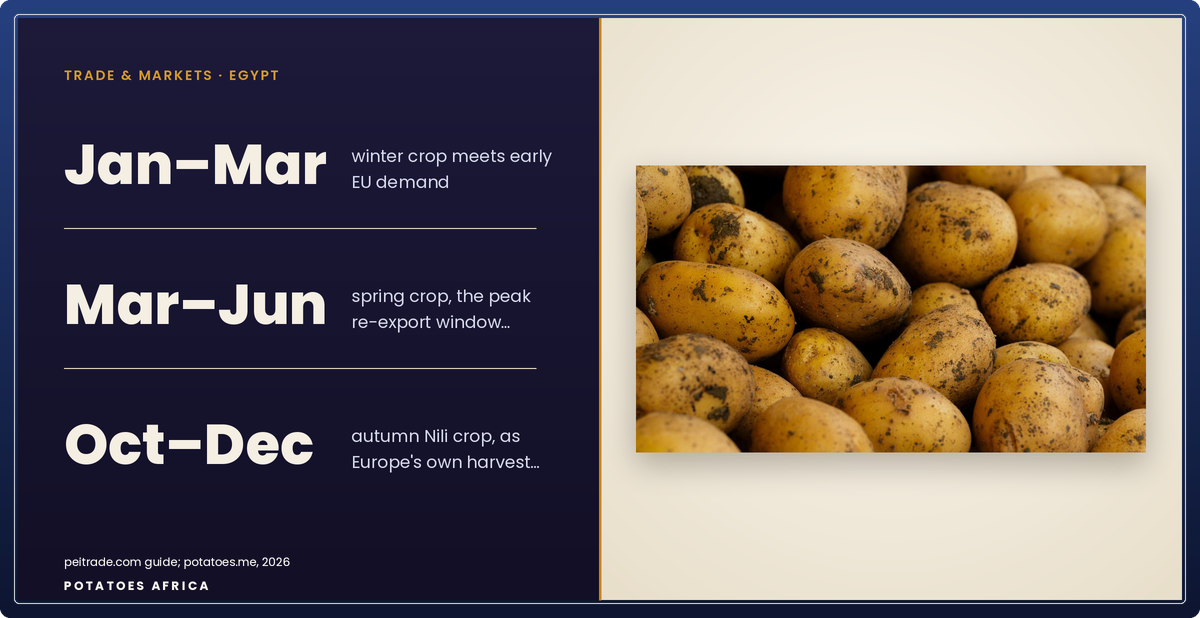
Egypt's potato corridor to Rotterdam runs on Dutch seed and a narrow calendar
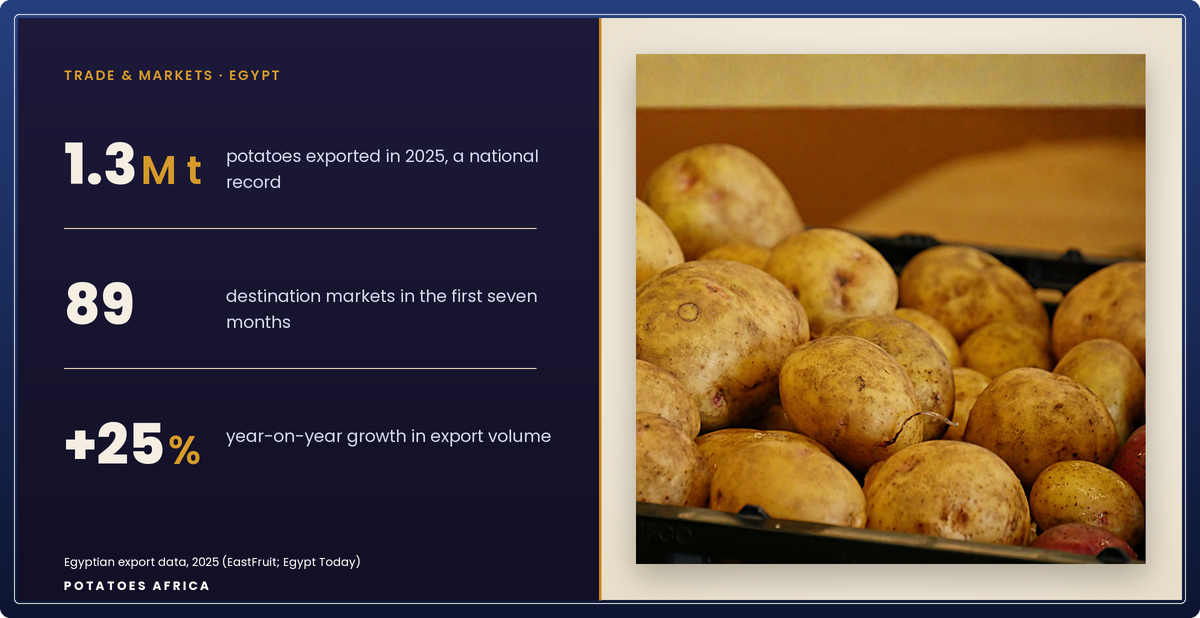
How Egypt turned the desert into Africa's potato export engine
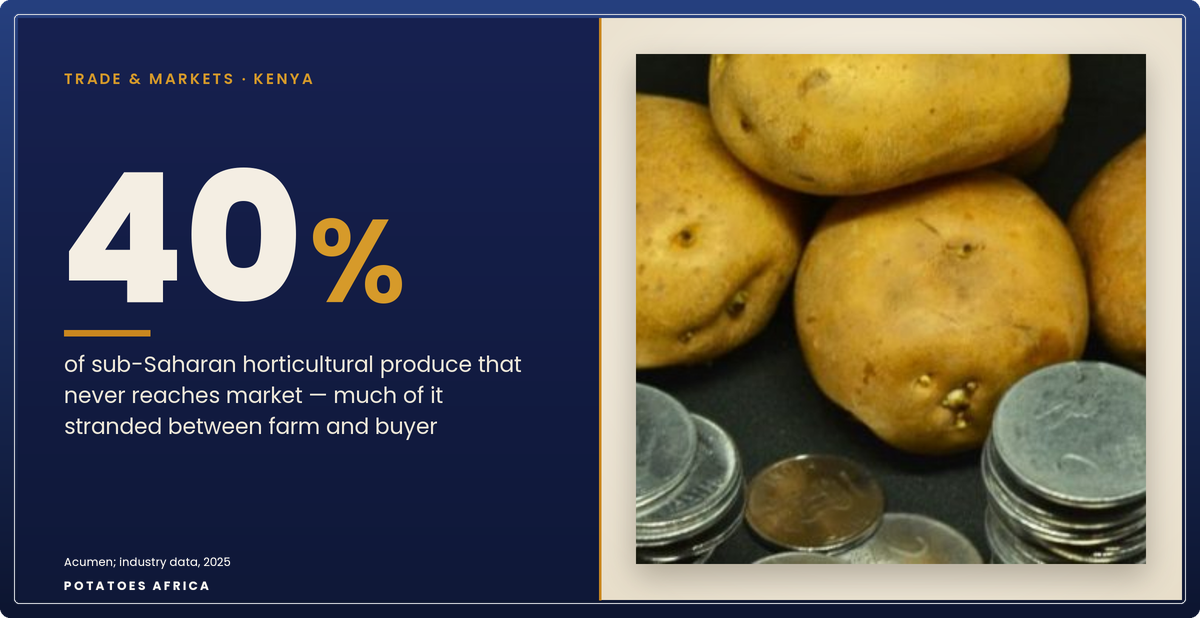
The missing middle: why aggregation decides who profits from potatoes
The week in African potato, in your inbox
Production, trade, policy and prices across the continent — one email, no noise.