One seed market, many rulebooks: Africa moves to harmonise certification
Across much of Africa, the trouble with certified seed is not only that there is too little of it, but that every country certifies it differently. A seed company approved in Kenya must start over to sell in Uganda or Zambia, facing separate registration, fees and delays that can stretch two to three years before quality seed reaches a farmer.
That fragmentation is what regional blocs are trying to fix. The Common Market for Eastern and Southern Africa adopted its Seed Trade Harmonisation Regulations, known as COMSHIP, in 2014, and the rules have now been gazetted in 11 member states — Burundi, Egypt, Ethiopia, Eswatini, Malawi, Rwanda, Kenya, Tunisia, Uganda, Zambia and Zimbabwe — with standard procedures in place for 13 staple crops, Irish potato among them. A common variety catalogue lets a company register once and trade region-wide; West Africa's ECOWAS and Southern Africa's SADC run parallel schemes.
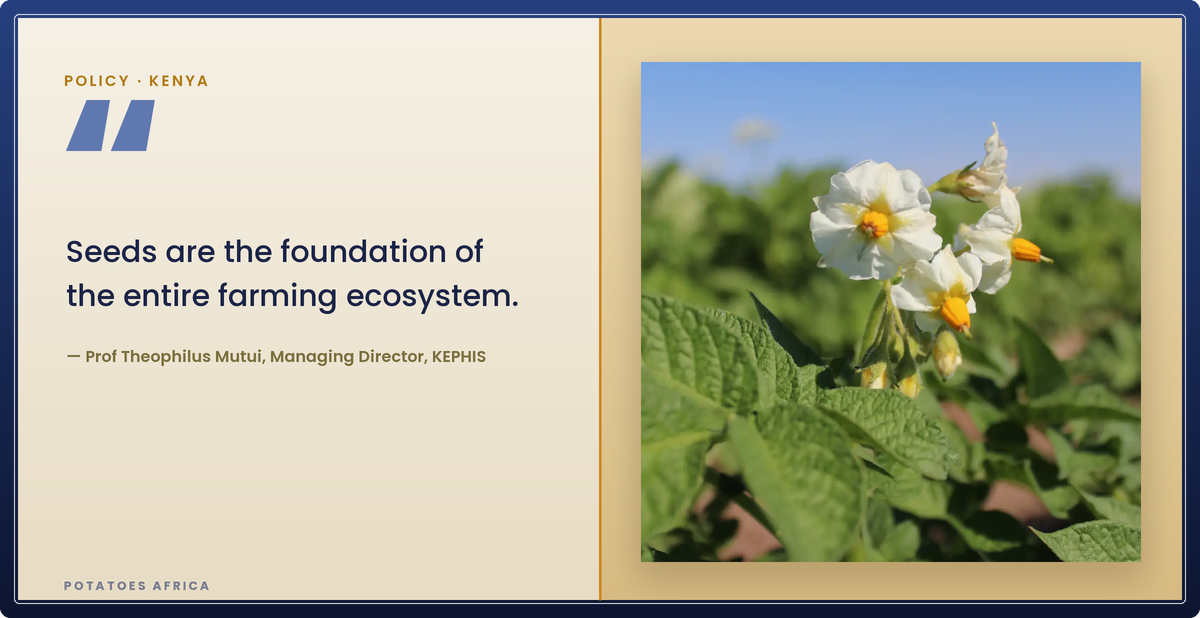
The scale of the gap is stark. The Alliance for Commodity Trade in Eastern and Southern Africa estimates that of the roughly 90 million smallholders in the COMESA region, only about 20% can access quality, improved seed; the rest plant recycled or informal material that drags yields down. As KEPHIS managing director Theophilus Mutui has framed it, certified seed is the foundation of the whole farming system — yet most farmers are building without it.
Harmonisation is not uncontested. The African Centre for Biodiversity and farmer groups have warned that rules written around formal, commercial seed can squeeze the informal exchange of landraces that millions still depend on — which is why a lower-tier "Quality Declared Seed" standard is being developed to bring farmers' varieties into the system rather than outlaw them.
For potato the stakes are specific: seed is bulky, perishable and disease-prone, so regional trade in clean seed could move quality planting material to where it is scarce. The rulebooks are converging on paper. The harder task — building the labs, inspectors and enforcement to make the rules real in the field — is the work that remains.
The week in African potato, in your inbox
Production, trade, policy and prices across the continent — one email, no noise.