Uganda's potato future runs through Kigezi's seed growers
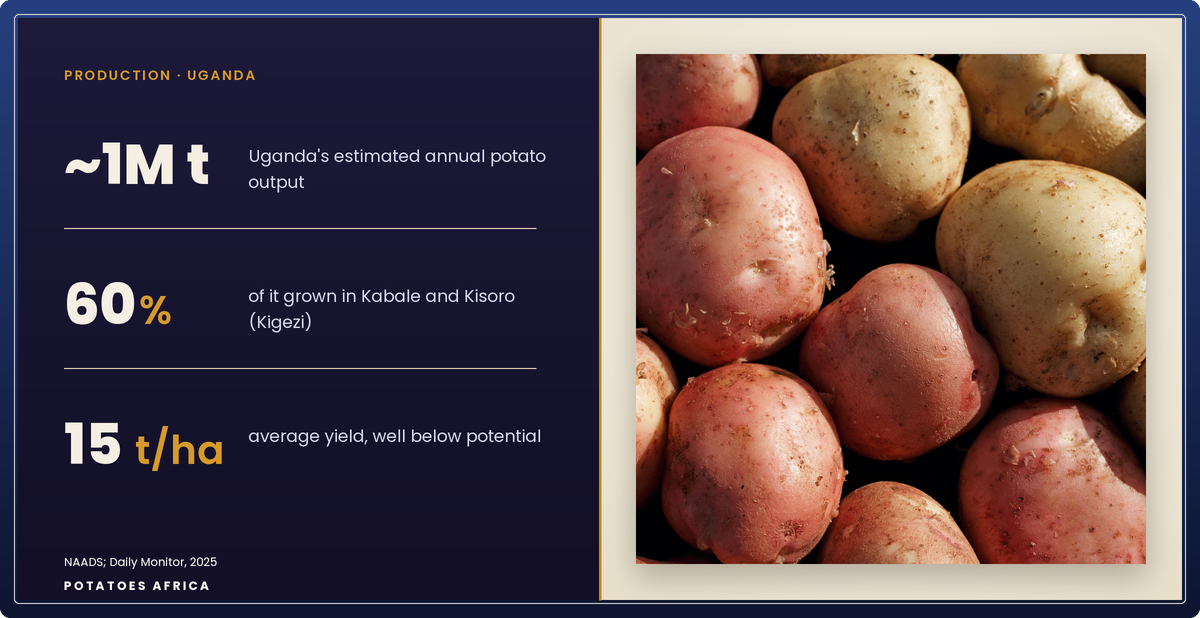
Most of Uganda's potatoes come from one corner of the country. The southwestern highland districts of Kabale and Kisoro — the Kigezi region — account for around 60% of national output, with more grown in the Elgon highlands around Kapchorwa. National production is estimated at 800,000 to a million tonnes a year, but average yields sit near 15 tonnes per hectare, well below what the crop can deliver.
As farmers there put it, potatoes pay well — as long as you have the right seed. That has spurred a farmer-led clean-seed movement. Growers organised in the Uganda National Seed Potato Producers Association work with scientists at the Kachwekano research institute, KaZARDI, to produce early-generation seed in screenhouses; one veteran Kabale producer can now raise up to eight seed tubers from a single plant for further multiplication. Private seed companies are scaling up too, using mechanised, disease-controlled production to supply Uganda and neighbouring DR Congo.
Value addition and storage are starting to follow. The commissioning of a products factory in Kabale has opened a processing outlet for both Irish and sweet potato, and donor-backed projects have helped women set up small-scale crisp-making enterprises and build seed stores. These matter because, without storage, farmers must sell their whole crop at harvest when prices are lowest — and seed potatoes are notoriously hard to hold between seasons.
The next lift may come from disease resistance. A late-blight-resistant version of the popular but highly susceptible Victoria variety has been developed and is awaiting clearance from Uganda's biosafety regulators. Blight is the recurring threat in the wet highlands, and a resistant Victoria could change the economics for thousands of Kigezi growers — if and when it is approved.
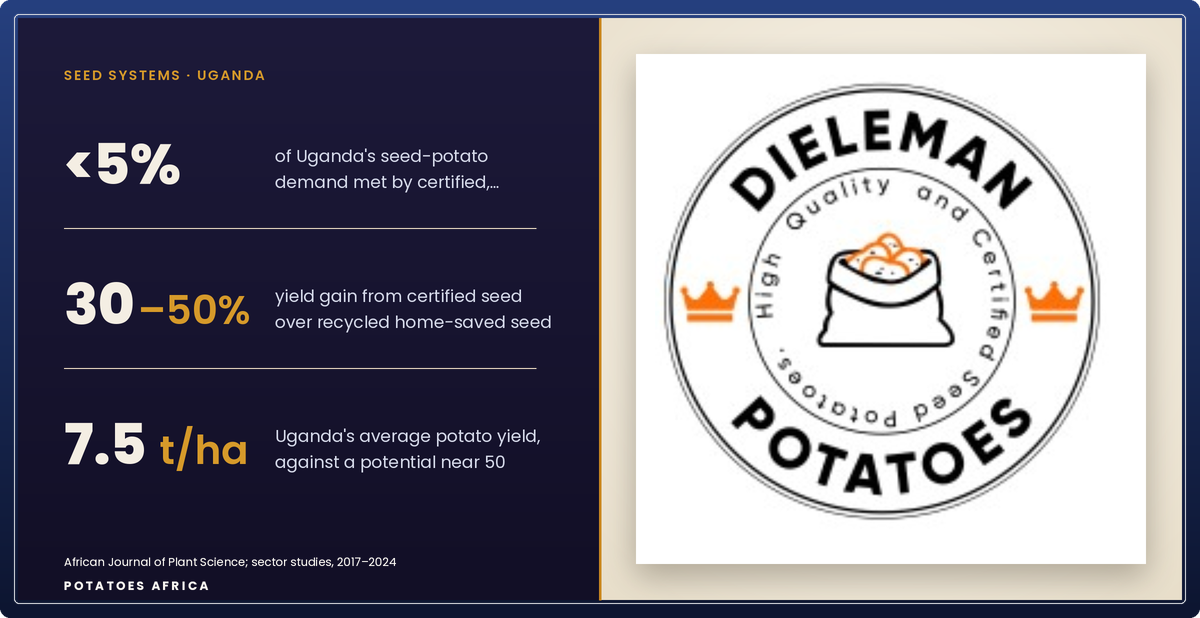
Dieleman Potatoes takes aim at Uganda's seed-potato gap
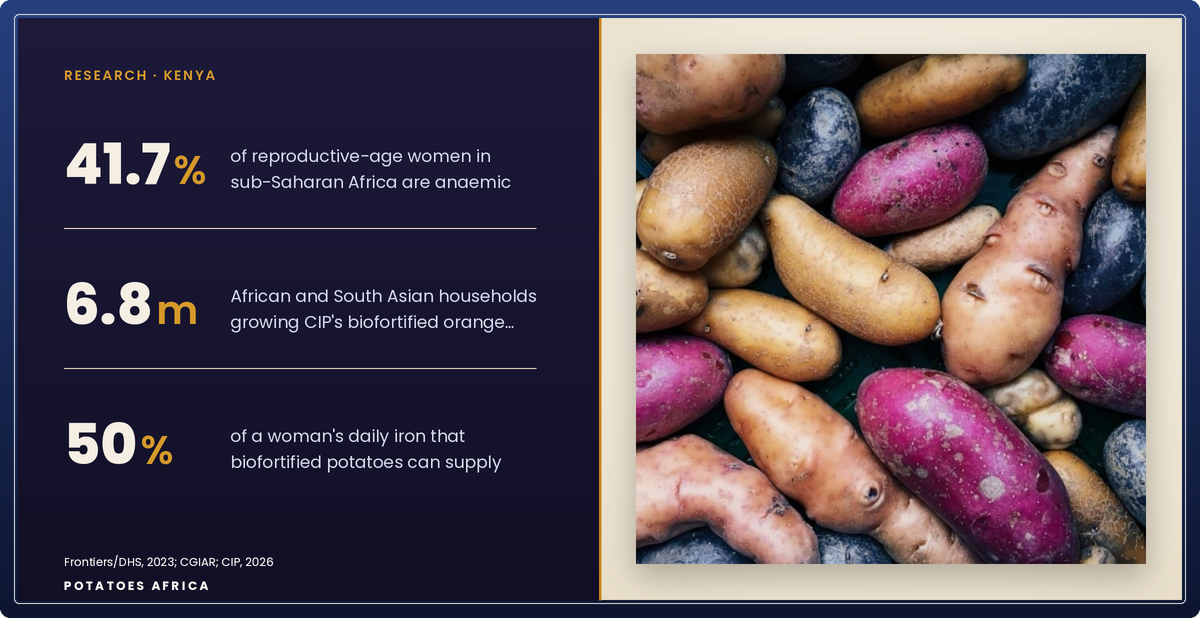
Iron-biofortified potatoes could help tackle anaemia in Africa's highlands
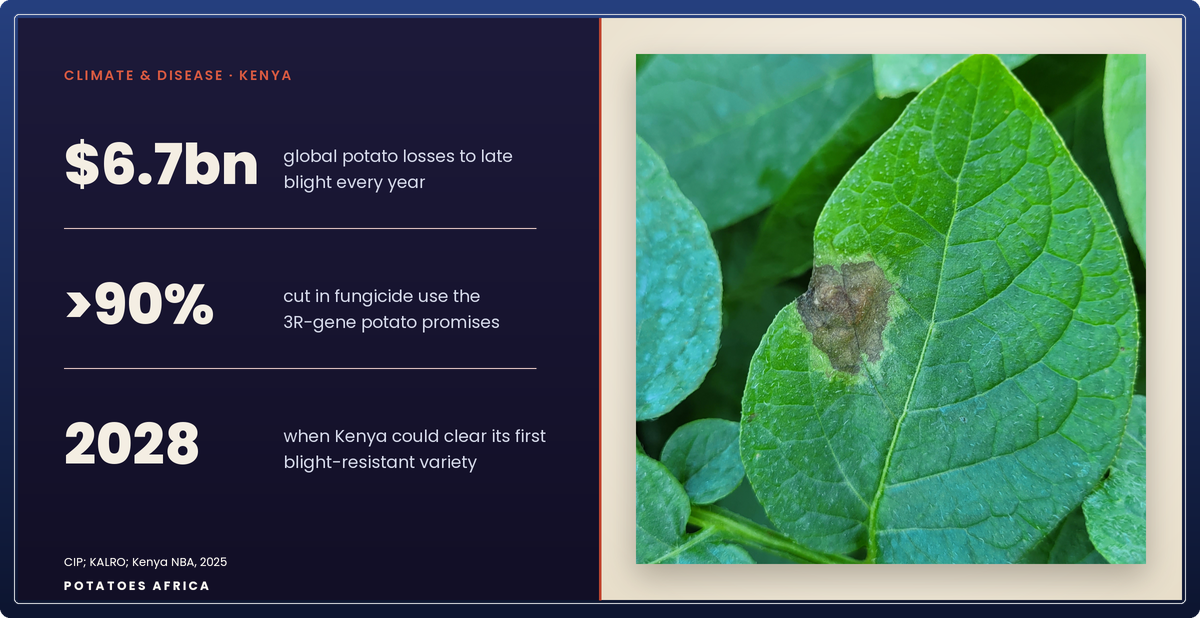
The 30-year hunt for a blight-proof potato reaches Africa's fields
The week in African potato, in your inbox
Production, trade, policy and prices across the continent — one email, no noise.