Fifty years of breeding, and Ethiopia's potato yields still trail. The bottleneck is seed.
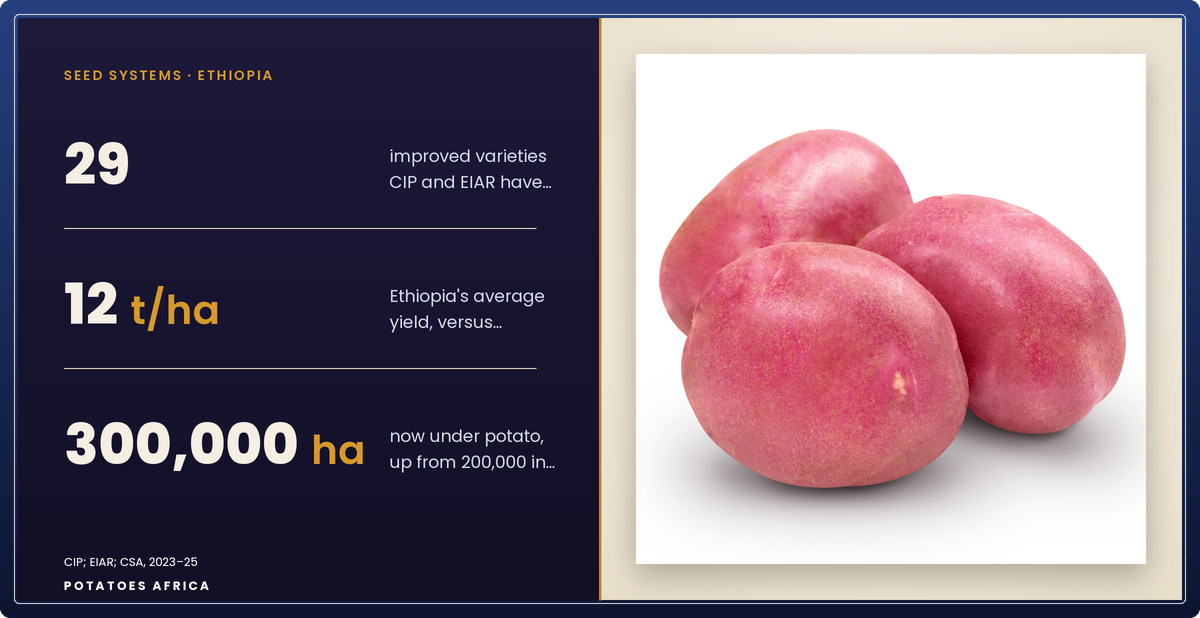
Half a century of breeding has given Ethiopia a deep bench of improved potatoes. Since 1975 the International Potato Center (CIP) has partnered with the Ethiopian Institute of Agricultural Research (EIAR), and the collaboration has released 29 varieties carrying traits such as late-blight resistance and higher yield potential — many descended from true potato seed first imported from CIP's headquarters in Peru.
Yet productivity remains stubbornly low. Ethiopian potato yields average around 12 tonnes per hectare — better than the single-digit figures of the past, but still far below the roughly 20 tonnes the crop can deliver — even as the area under potato expanded from about 200,000 hectares in 2013 to 300,000 in 2023. In a country where smallholders hold the bulk of farmland and many highland plots run to less than half a hectare, potato's short cycle and high yield per unit area make it one of the few realistic routes out of poverty.
The reason good varieties do not translate into good harvests is the seed system. Clean seed of improved varieties is scarce, so most farmers replant degenerating tubers that accumulate bacterial wilt and viruses. Reviews of Ethiopia's seed sector, including work published in F1000Research, point to a fragmented regulatory framework and weak quality assurance as core obstacles — the formal system simply cannot multiply and certify enough clean material to matter at national scale.
The current push is to fix distribution from the bottom up rather than wait for a national overhaul. CIP's "Seeds for change" programme is strengthening decentralised farmer seed-producer cooperatives, linking them to early-generation seed and building the policies and value-chain relationships around them, with development agents training tens of thousands of farmers. It is unglamorous plumbing — the work that turns a released variety into a planted one — but in Ethiopia's potato story it is the part that has been missing.
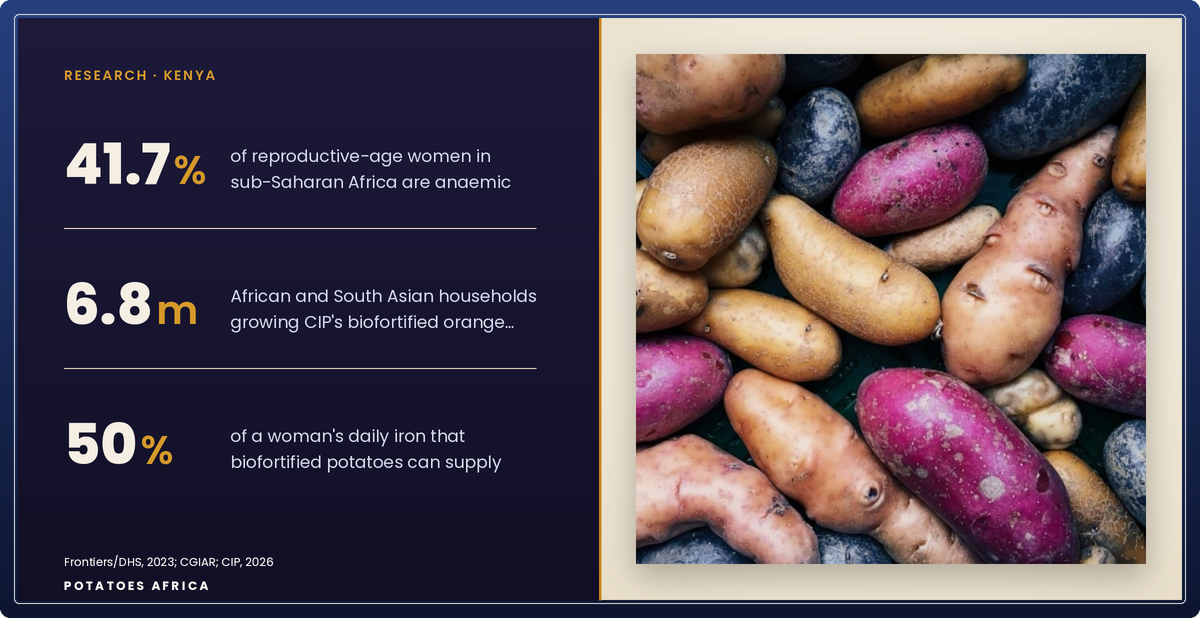
Iron-biofortified potatoes could help tackle anaemia in Africa's highlands
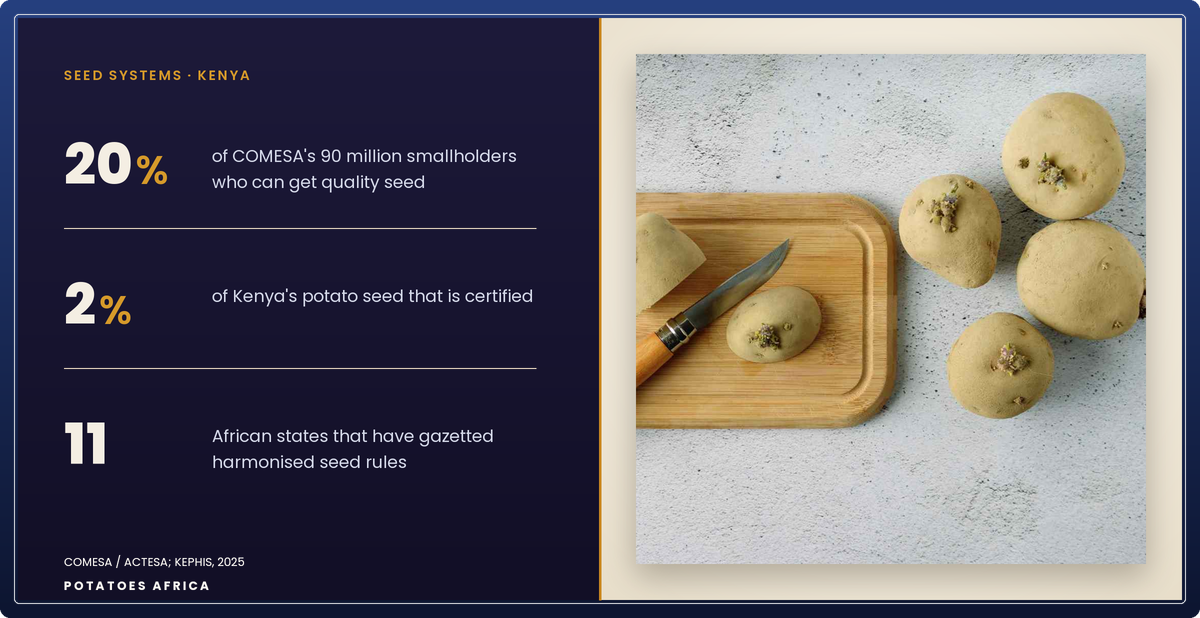
The Seed Reckoning: Africa's potato seed gap, by the numbers
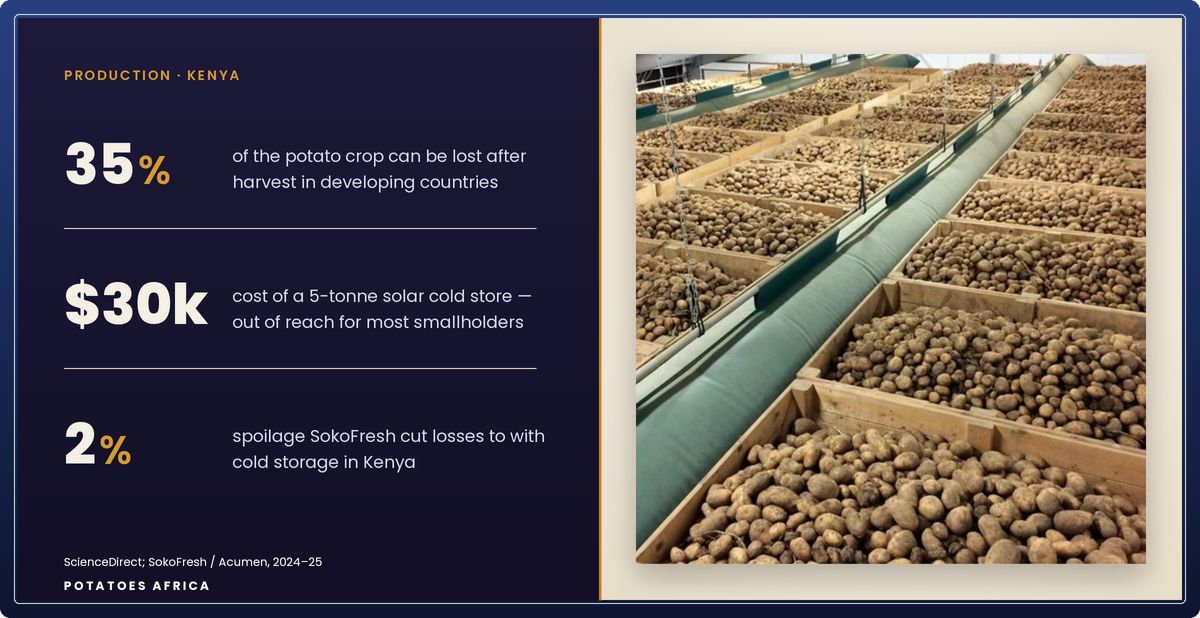
Building a cold chain that smallholders can actually use
The week in African potato, in your inbox
Production, trade, policy and prices across the continent — one email, no noise.