Plateau State wants to triple potato yields. Seed is the test.
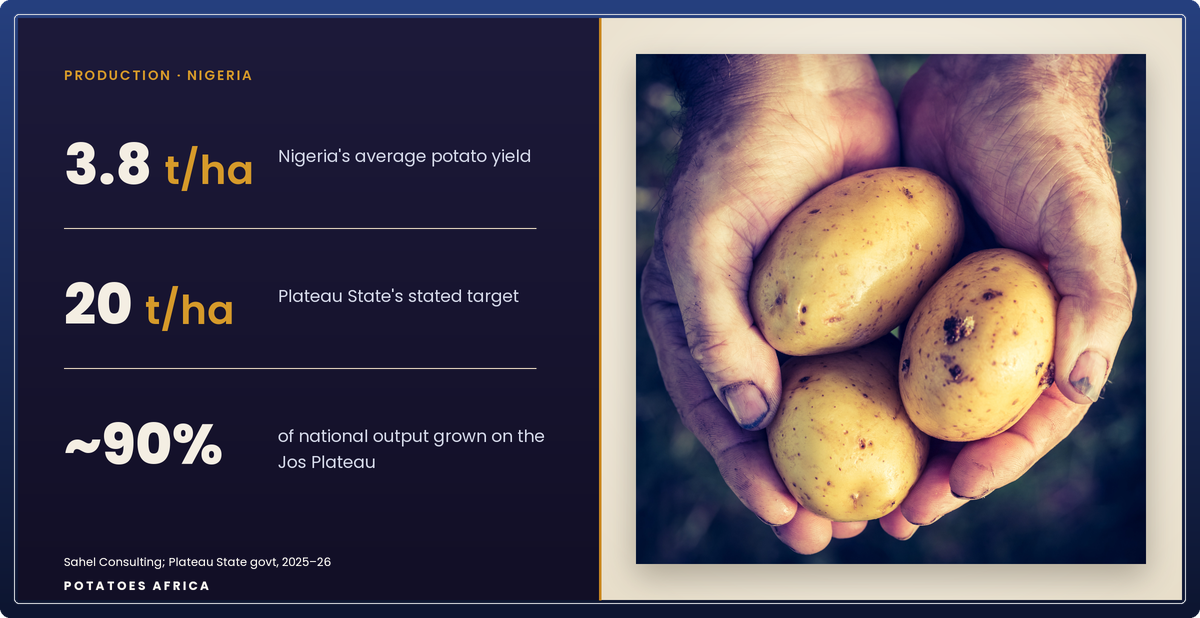
Plateau State's governor, Caleb Mutfwang, has put potatoes at the centre of the state's investment pitch. Speaking to CNBC Africa at an investment forum in Lagos, he said Plateau is accelerating a plan to lift potato yields from about 7 to 20 tonnes per hectare, with seed multiplication and mechanisation as the core of the strategy — part of a wider effort to build a non-oil growth story and counter investor concerns about security.
The gap he is targeting is real and wide. The Jos Plateau is the largest contiguous potato-growing area in sub-Saharan Africa and accounts for the overwhelming majority of Nigeria's crop. Yet national average yields sit at roughly 3.8 tonnes per hectare across some 320,000 hectares and about 1.2 million tonnes a year — against the 20 tonnes per hectare that analysis by Sahel Consulting and others argues is reasonably achievable under smallholder conditions.
The binding constraint is the same one that holds back Kenya and Ethiopia: poor access to quality seed. Most Plateau farmers replant degenerating tubers, and the problem is compounded by late blight in the wet season, costly fungicides and fertiliser, weak rural roads and insecurity. Nigeria's National Root Crops Research Institute has been developing late-blight-resistant varieties in the Plateau and Taraba growing belts, aiming to give farmers material that can hold up against the disease that routinely shaves yields.
Whether the headline target is met will turn on execution rather than ambition. It means standing up seed multiplication at scale, getting clean seed and machinery to smallholders who still work with hoes, and de-risking the land-tenure and security problems that deter agribusiness investors — exactly the constraints Mutfwang acknowledged he is trying to address. The yield arithmetic is straightforward; the seed system is the hard part.
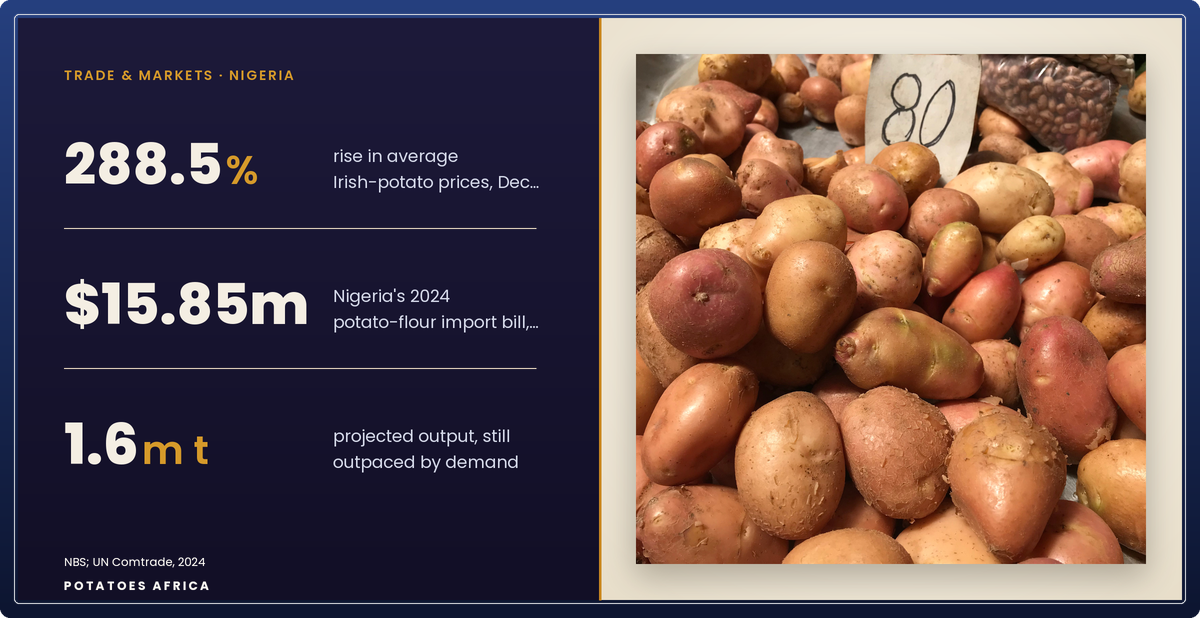
Production costs and tight supply push Nigeria's potato prices higher
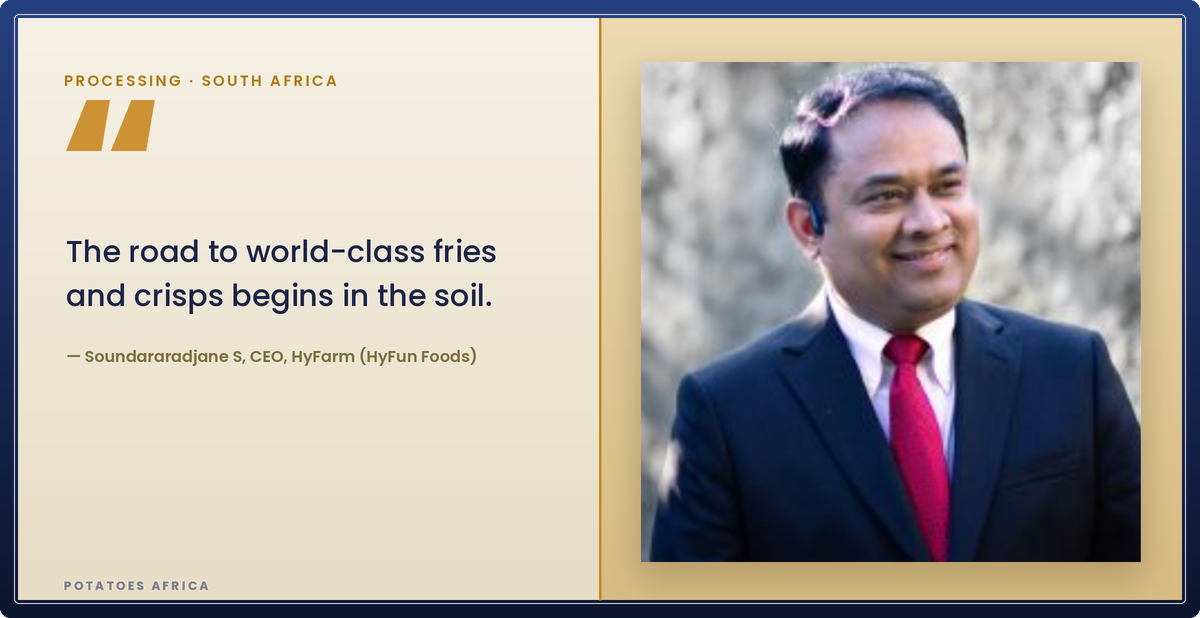
Soundararadjane S: India's potato-processing story and its lessons for Africa
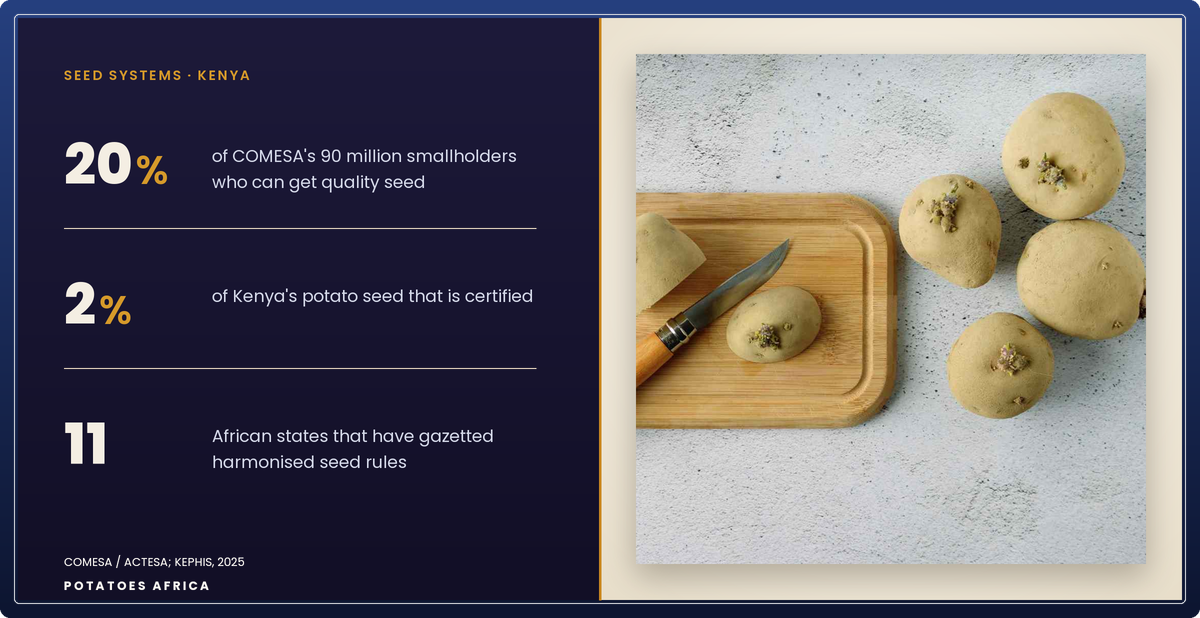
The Seed Reckoning: Africa's potato seed gap, by the numbers
The week in African potato, in your inbox
Production, trade, policy and prices across the continent — one email, no noise.